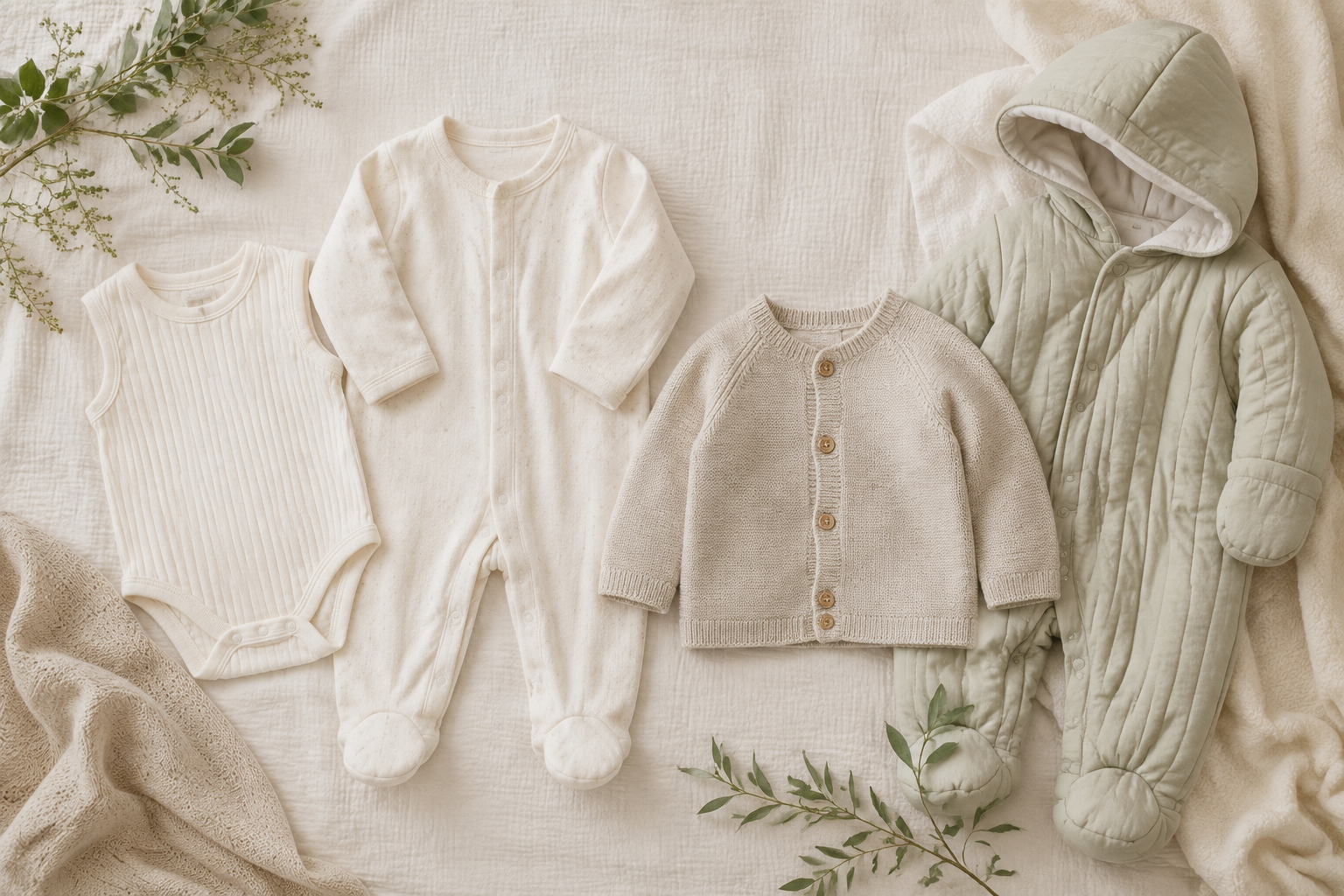
UK weather can change quickly, so flexible layers are more useful than one fixed outfit formula. NHS guidance suggests dressing a newborn in one more layer than an adult would wear in the same conditions, then checking the baby’s chest or back and adjusting.
Spring and autumn
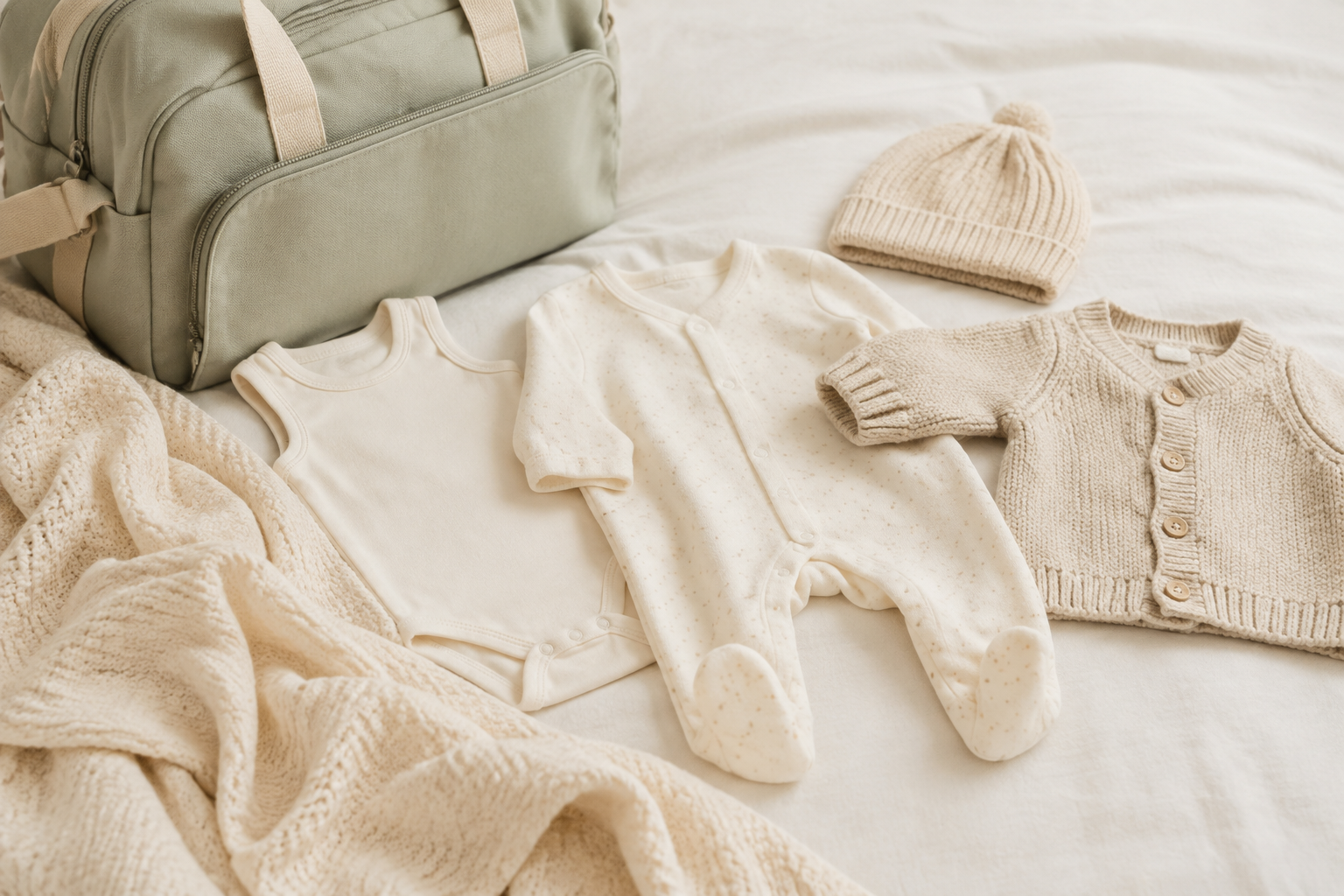
A vest and babygrow are a flexible starting point, with a cardigan or light outdoor layer available. Choose pieces that are easy to remove as temperatures rise.
Summer
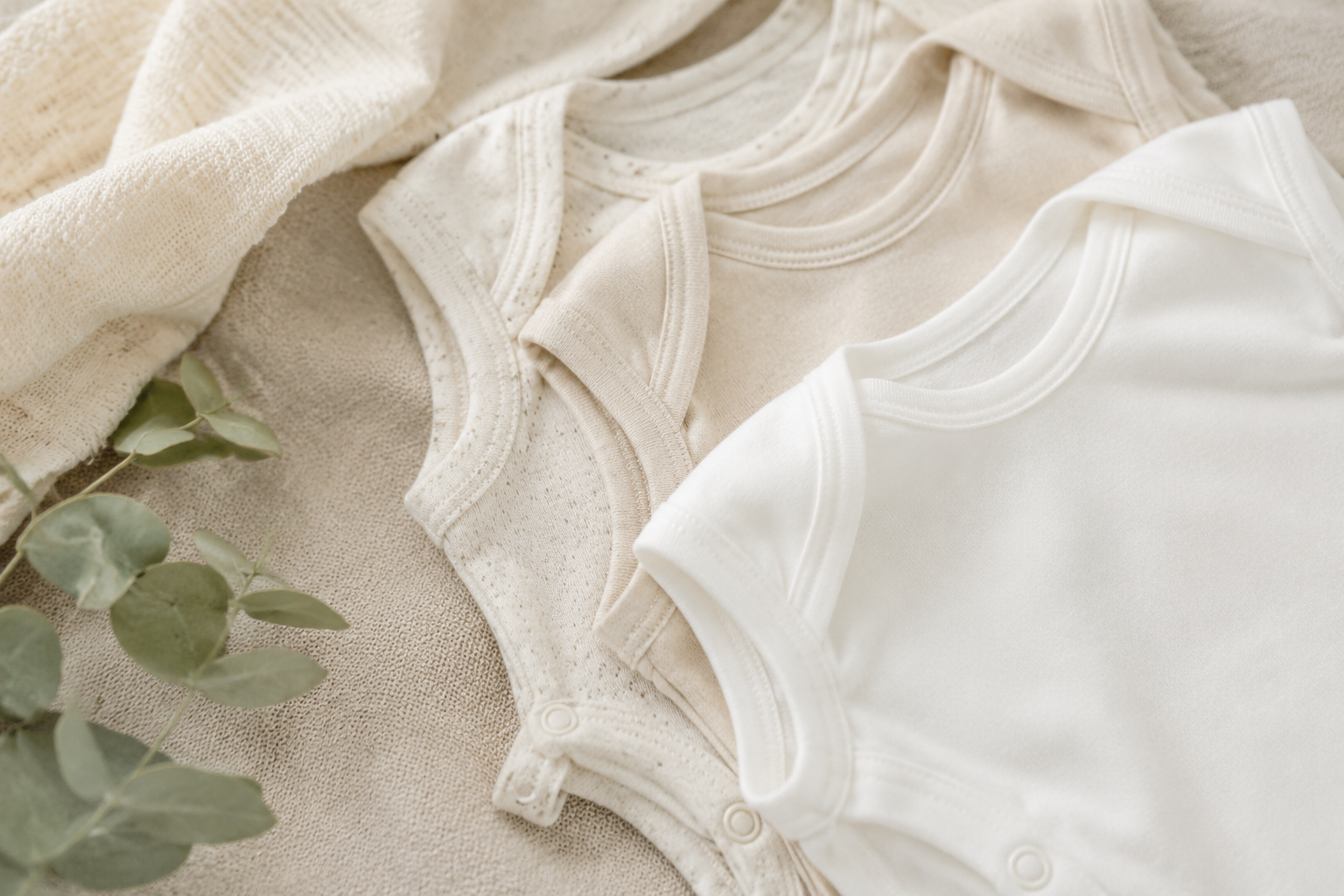
In warm conditions, a short-sleeved vest may be enough. Keep babies out of direct sun and use shade rather than covering a pram with a blanket, which can trap heat. Remove hats indoors.
Winter
Use several light layers rather than one overly heavy garment. A vest, babygrow and suitable outer layer can be adjusted easily. Remove outdoor hats and heavy layers in warm shops, homes and vehicles.
Sleep and temperature
For sleep, follow current safer-sleep guidance and sleeping-bag tog instructions. The Lullaby Trust recommends 16–20°C. Browse personalised baby vests, baby grows and the newborn range. Read NHS guidance and Lullaby Trust advice.
Frequently asked questions
How many layers should a newborn wear?
One more layer than an adult is a useful daytime starting point, but check the baby’s chest or back and adjust.
How do I know if a newborn is too hot?
Hot, sweaty or clammy skin on the chest or back suggests removing a layer.
Should a newborn wear a hat indoors?
No. NHS guidance advises removing hats indoors and in warm vehicles.
What room temperature is recommended for baby sleep?
The Lullaby Trust recommends 16–20°C, alongside suitable sleepwear and regular checks.
This guide offers general clothing information. For health, temperature or safer-sleep concerns, follow current NHS guidance or speak to a qualified healthcare professional.