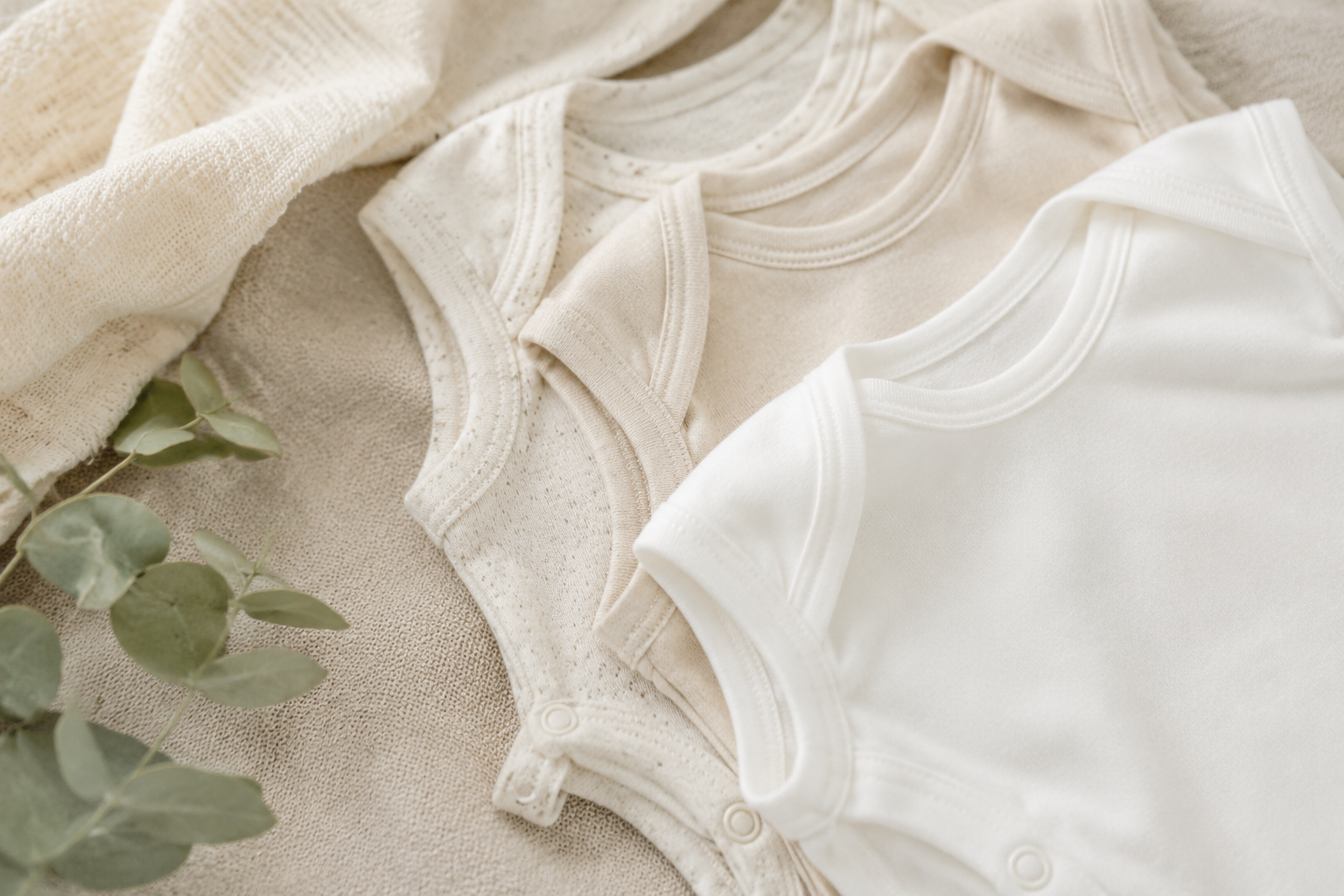
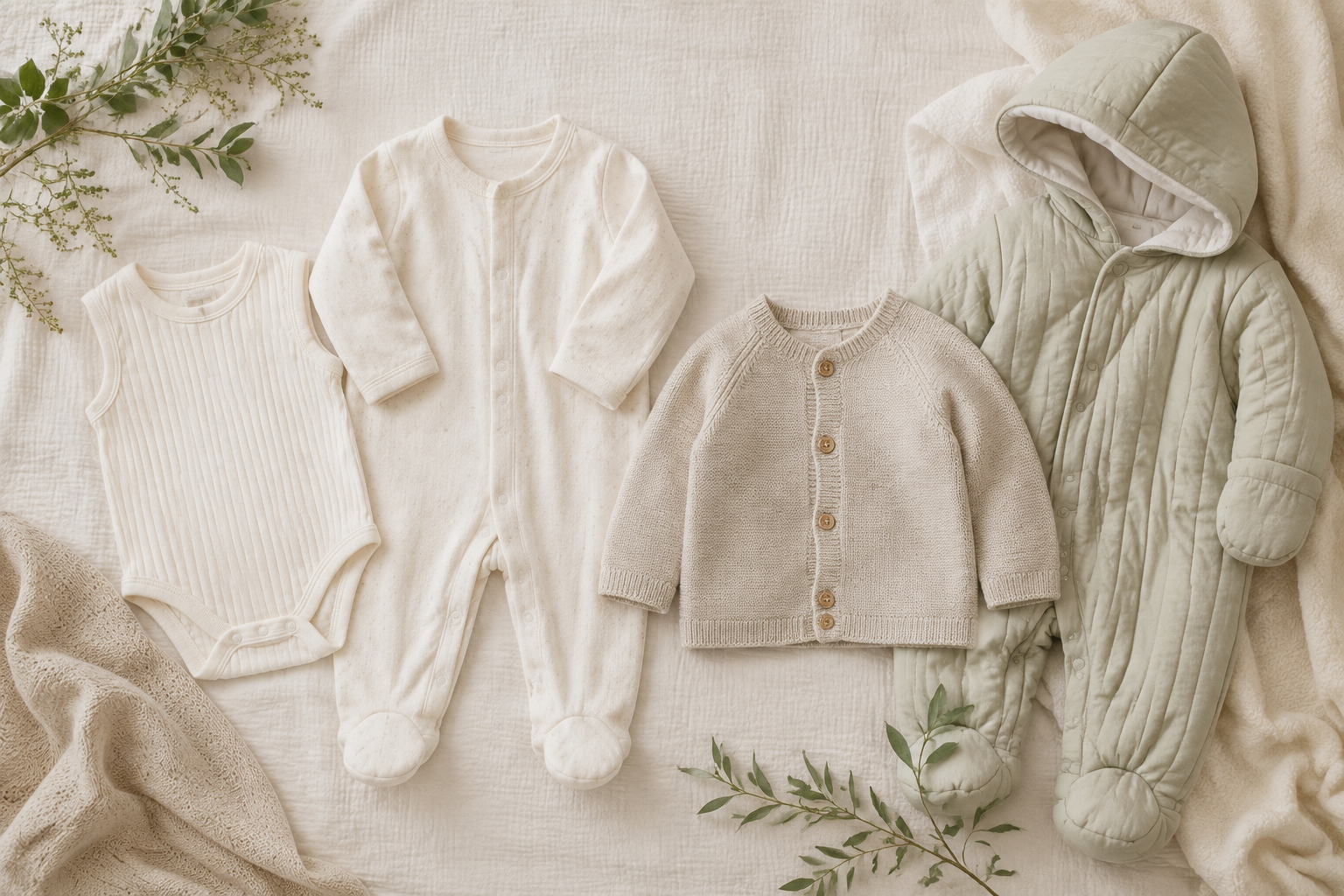
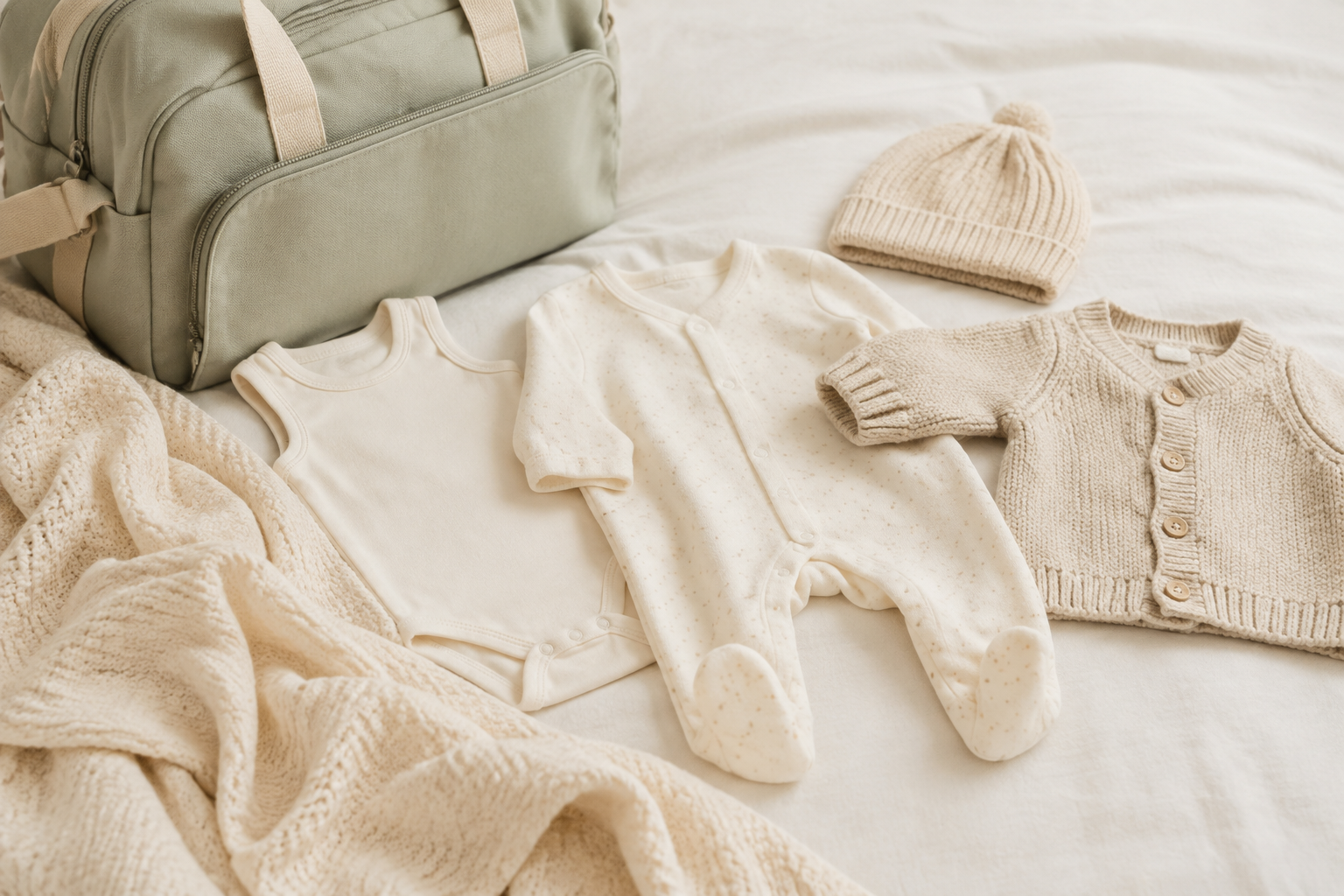
Newborn clothes spend a lot of time against delicate skin, so it makes sense to think carefully about how they are washed. The good news is that you do not need a complicated laundry routine. A gentle detergent, the correct washing temperature and the garment’s care label are usually the best starting points.
This UK guide explains how to wash newborn clothes before their first wear, how to deal with everyday stains and how to protect printed or personalised designs.
Many parents choose to wash new baby clothes before putting them on their newborn. Clothes can collect dust and residues while they are manufactured, stored, transported and handled. A first wash also lets you check how each garment responds before it becomes part of your baby’s regular clothing rotation.
This applies to everyday basics such as vests and sleepsuits as well as gifted and personalised newborn clothes. Always read the sewn-in care label first because fabrics, prints and decorations can need different treatment.
There is no single detergent that suits every family. A mild, fragrance-free or non-biological detergent is often chosen for baby laundry, particularly where sensitive or eczema-prone skin is a concern. Leeds Teaching Hospitals NHS Trust advises families managing childhood eczema to use non-biological washing powder without conditioner.
Use only the recommended amount and make sure garments are rinsed thoroughly. If your baby develops persistent irritation, speak to your health visitor, pharmacist or GP rather than repeatedly changing products without advice.
Read the NHS Trust’s childhood eczema guidance.
The care label should decide the temperature. Many cotton baby clothes can be washed at 30°C or 40°C, but the correct setting depends on the garment, its colour and any printed or personalised finish.
A hotter wash is not automatically better. It can shrink some fabrics, fade colours and shorten the life of printed designs. If an item is heavily soiled or someone in the household is unwell, follow the care label and seek appropriate health guidance where necessary.
Personalised details make an outfit special, but they also benefit from a little extra care. For personalised garments:
These steps are particularly useful for frequently washed personalised baby vests. If you are deciding which everyday layer to choose, our guide to how many vests a newborn needs can help with planning.
They can often be washed together when the colours, care labels and washing settings are compatible. Some families prefer a separate baby wash because it makes sorting small items easier or because they use a different detergent.
If anyone in the household uses heavily fragranced laundry products or has clothing contaminated with oil, chemicals or illness-related soiling, keeping newborn items separate may be more practical.
Acting quickly usually makes stains easier to remove:
Avoid mixing cleaning products, and keep detergents and stain removers locked away from children.
There is no compulsory week. Many parents wash the first-size essentials when they begin packing the hospital bag, then store them in a clean, dry drawer. Washing too early is not harmful, but clothes may need freshening if they sit uncovered for a long time.
Start with the pieces you are most likely to use: vests, sleepsuits or personalised baby grows, hats, bibs and a suitable going-home outfit. The complete UK newborn-clothes checklist can help you avoid washing or buying more than you need.
It is generally a sensible precaution because new garments may have collected dust or residues during manufacturing, storage and handling. Check the care label before washing.
Not always. They can usually share a wash when colours, care labels and detergent requirements are compatible. A separate wash may be easier for families using a different detergent or dealing with heavily soiled adult clothing.
Many everyday baby garments can be washed at 30°C, but the sewn-in care label is the authority. Use the temperature and cycle specified for that individual item.
Parents managing eczema or sensitive skin are often advised to avoid fragranced conditioners. Follow professional advice for your baby and remember that some products may also affect absorbency or specialist fabric finishes.
Check its label, turn it inside out, use a gentle cycle, avoid bleach and do not iron directly over the personalised design. Follow any product-specific care instructions supplied with the vest.
Only when the garment’s care label permits tumble drying. High heat can affect some fabrics, transfers and printed finishes, so a lower setting or air drying may be preferable.
Stop using the suspected product and seek advice from a health visitor, pharmacist or GP, especially if the irritation is persistent, widespread or worsening.