
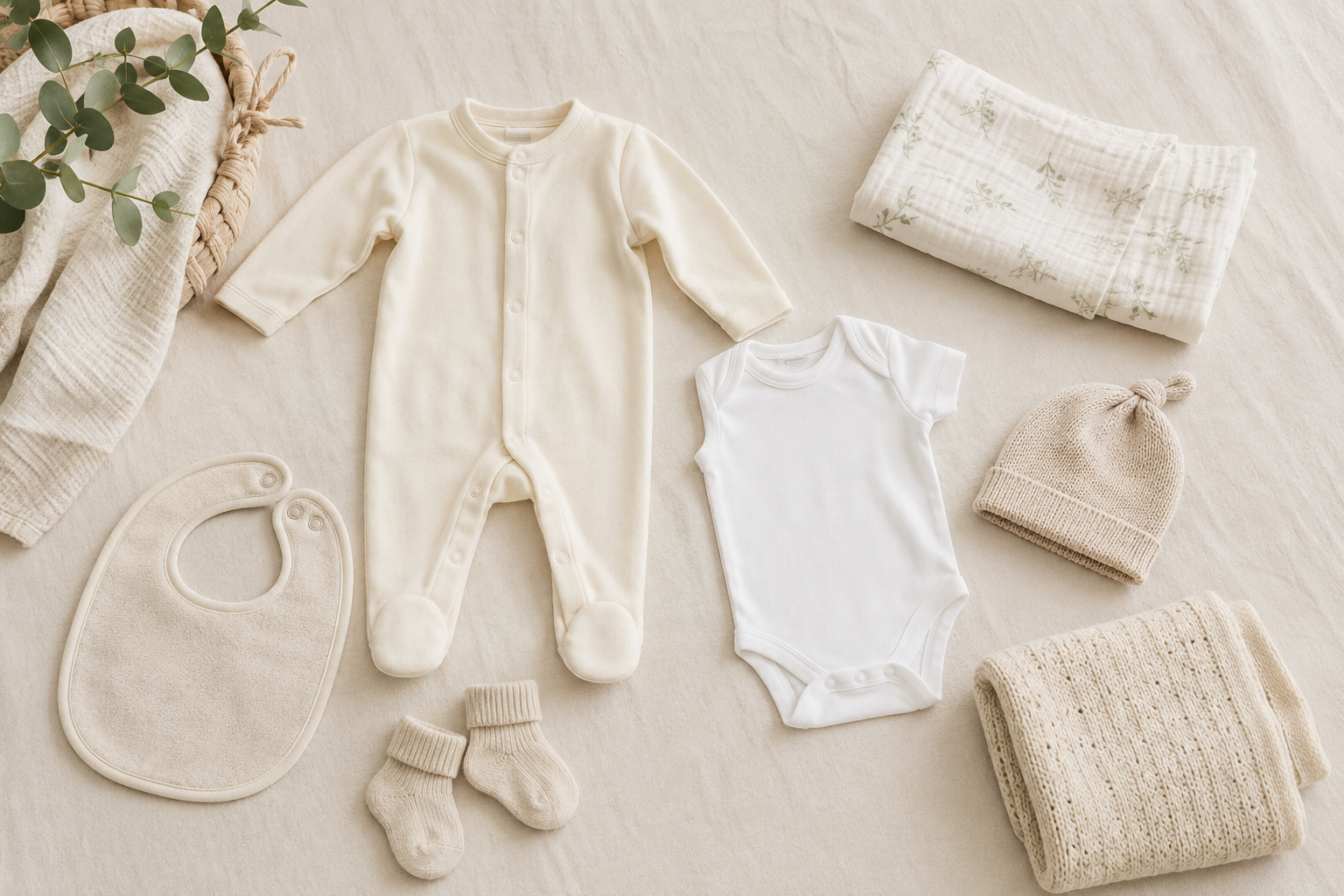
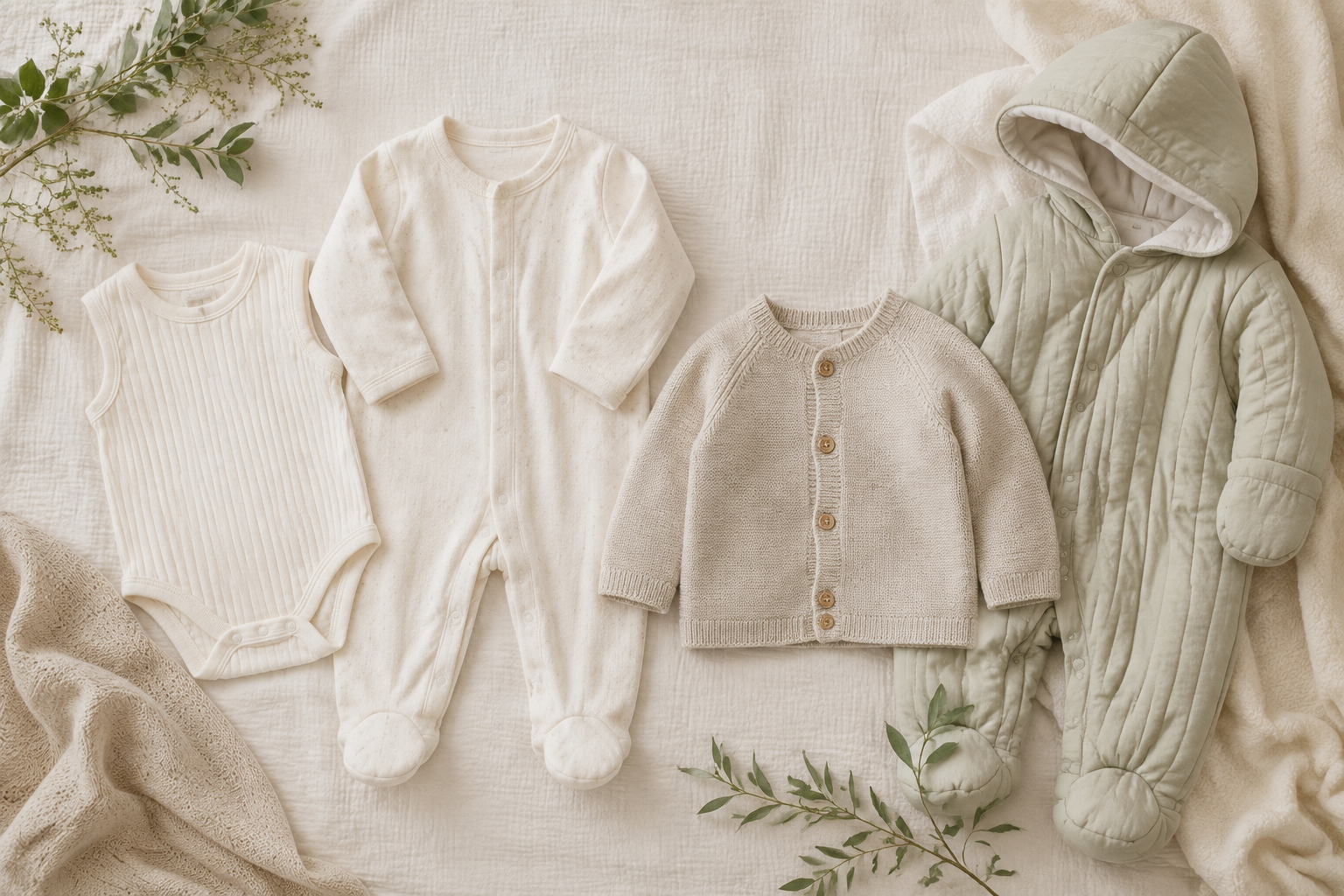
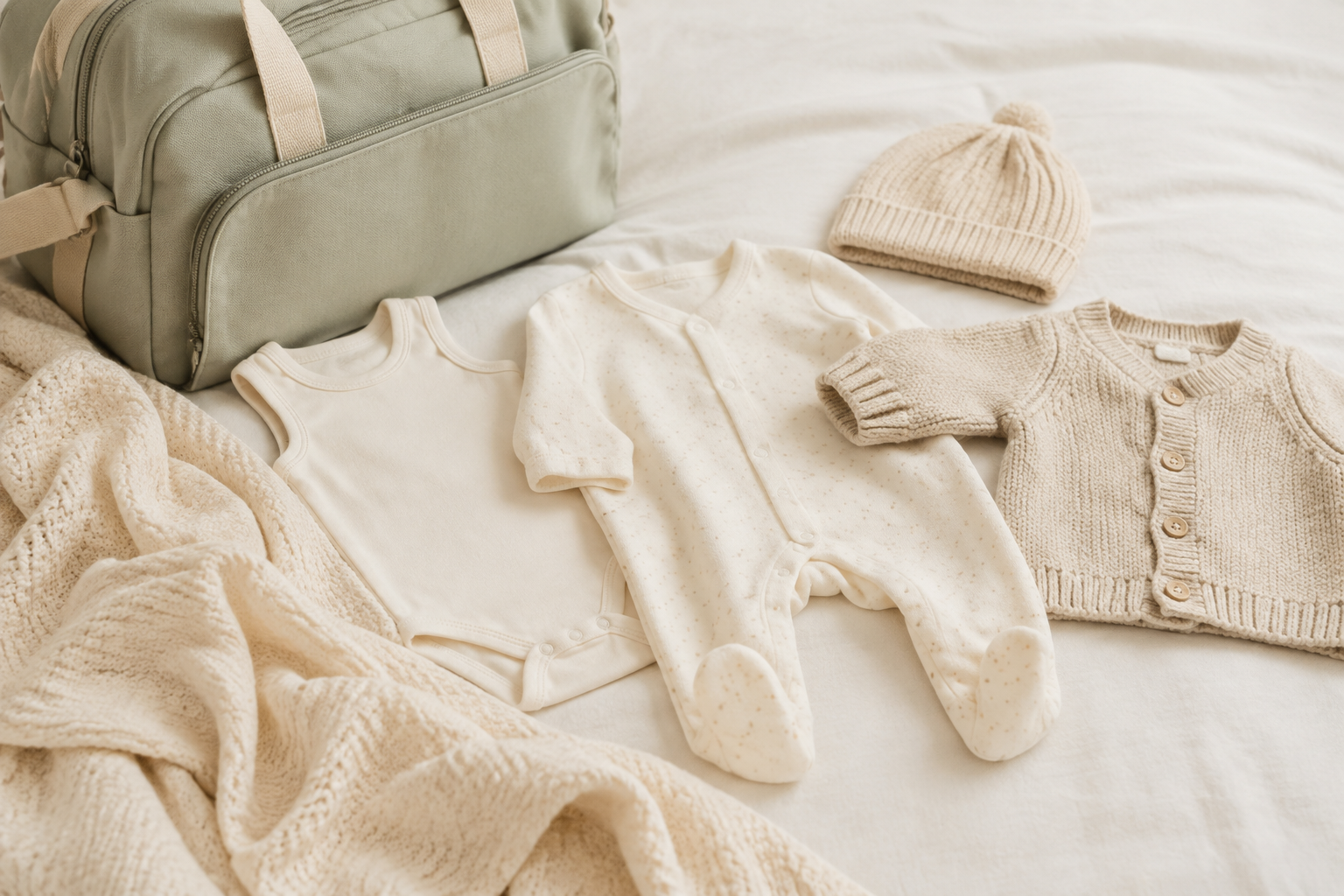
Most newborns need a practical mix of 6–8 sleepsuits or baby grows, 6–8 vests or bodysuits, two cardigans, two hats, several pairs of socks and a suitable outdoor layer. The exact amount depends on how often you wash clothes, the season and how quickly your baby grows.
Preparing for a new baby is exciting, but the clothing lists can quickly become overwhelming. This straightforward UK checklist explains what is genuinely useful during the first few weeks, how many of each item to consider and which sizes are worth buying.
This is a useful starting point rather than a strict rule. If you expect to wash clothes every day, you may need fewer items. If you prefer to do larger washes, a few extras can make the first weeks easier.
Baby grows—also commonly written as babygrows—and sleepsuits are among the most useful newborn essentials. They cover the arms, legs and often the feet, making them comfortable for sleep and easy to layer over a vest.
A starting supply of six to eight usually gives you enough for regular changes without filling the wardrobe with a size your baby may quickly outgrow. Our personalised baby grows can also make thoughtful coming-home outfits, announcement pieces and new-baby gifts.
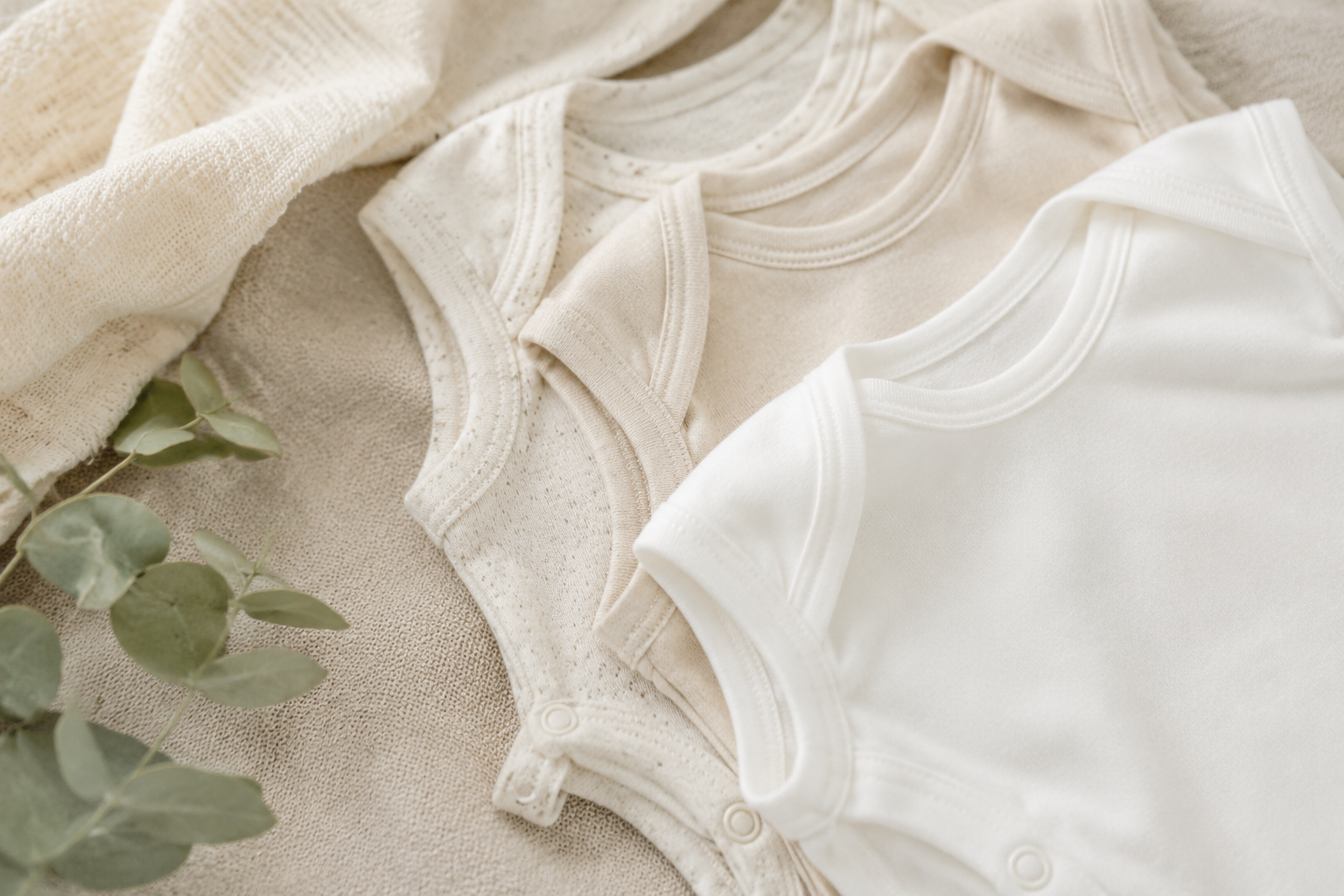
Baby vests, sometimes called bodysuits, are usually worn as a base layer. Their envelope necklines and popper fastenings make changing simpler, while the close fit helps keep a nappy comfortably covered.
Six to eight vests is a sensible starting point. Choose short sleeves for warmer conditions and long sleeves when an extra layer is helpful. See our personalised baby vests for name, announcement and gift ideas.
Two cardigans or lightweight jumpers are normally enough to begin with. Layers are useful because they can be added or removed as the temperature changes. Look for soft fabrics and simple fastenings that do not make dressing unnecessarily difficult.
A couple of soft hats can be useful for journeys outside and for leaving hospital, depending on the weather and advice from your maternity team. Indoors, hats are not generally needed once your baby is warm and settled.
If you would like a special first outfit or gift, explore our personalised newborn hats.
Bibs are not only for weaning. They can help protect clothing from milk dribbles and everyday spills from the earliest weeks. Eight to twelve bibs or muslin cloths gives you enough to rotate between feeds and washes, although every family uses them differently.
Our personalised baby bibs can add a memorable detail to a practical new-baby present.
Two or three lightweight blankets are useful for cuddles, supervised floor time and journeys. Choose breathable materials suited to the season and always follow current UK safer-sleep guidance when putting a baby down to sleep.
A personalised baby blanket can also become a keepsake when it features a baby’s name or birth details.
Newborn sizing varies between brands, so check the measurements or weight guide rather than relying only on the age label. It is tempting to buy everything in newborn size, but a balanced wardrobe usually includes a smaller number of newborn pieces and more items in 0–3 months.
Keep tags and packaging on a few items until you know what fits. Babies grow at different rates, and you may find that some newborn sizes are worn only briefly.
Flexible layers work best when temperatures change throughout the day. A vest, sleepsuit and light cardigan give you options without relying on one heavy garment.
Prioritise lightweight, breathable clothes and avoid unnecessary layers in warm weather. A short-sleeved vest may be enough in some conditions, but always check that your baby is comfortable.
Use several manageable layers and add an appropriate outdoor layer when leaving the house. Remove hats and heavy outerwear when moving into a warm indoor space.
Personalised clothing can turn a practical essential into something families remember. A name, initial, short message or birth detail can work beautifully, but it is still important to choose the correct size, comfortable material and an easy-care design.
Browse our complete range of personalised newborn clothes, including baby grows, vests, bibs, blankets, hats and pyjamas.
Most families find that six to eight everyday outfits provide a practical starting point. You may need more if you wash less frequently or your baby regularly needs several changes a day.
A mixture is usually safest. Buy a small set of newborn clothes and a larger selection in 0–3 months, checking each brand’s measurements because sizing can vary.
A vest or bodysuit is a close-fitting base layer that normally leaves the legs uncovered. A baby grow or sleepsuit covers more of the body and is often worn over a vest.
Most newborns wear sleepsuits rather than traditional two-piece pyjamas. As babies grow, families may introduce other styles of personalised baby pyjamas suited to their age and the product’s sizing.
Yes. Personalised blankets, bibs, grows, vests and hats combine a practical item with a keepsake. Check the spelling carefully and choose a size that gives the baby time to wear the gift.
Quantities in this guide are general suggestions. Always follow product instructions and current guidance from your midwife, health visitor or the NHS where safety or your baby’s individual needs are concerned.

One Response