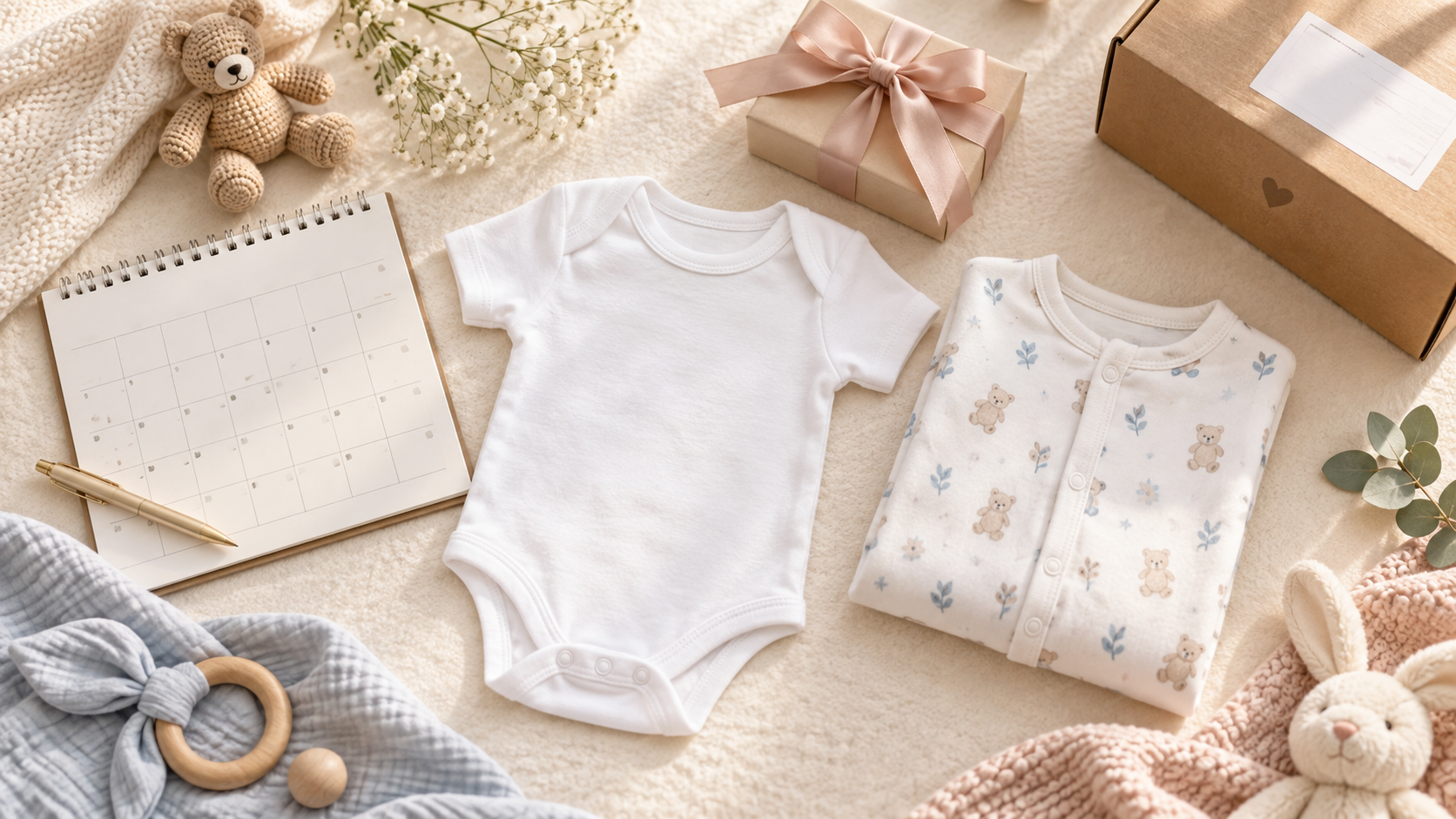
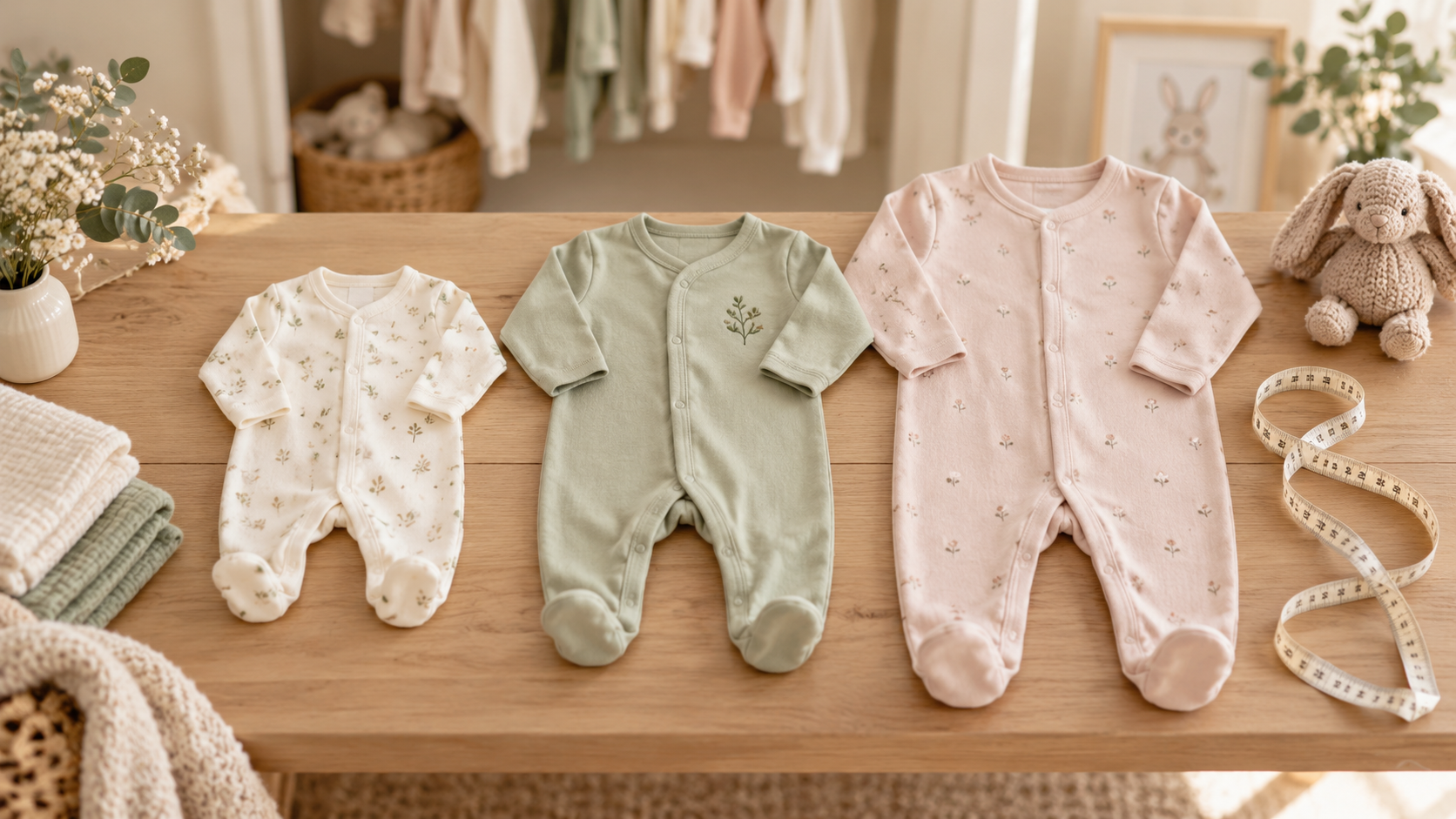
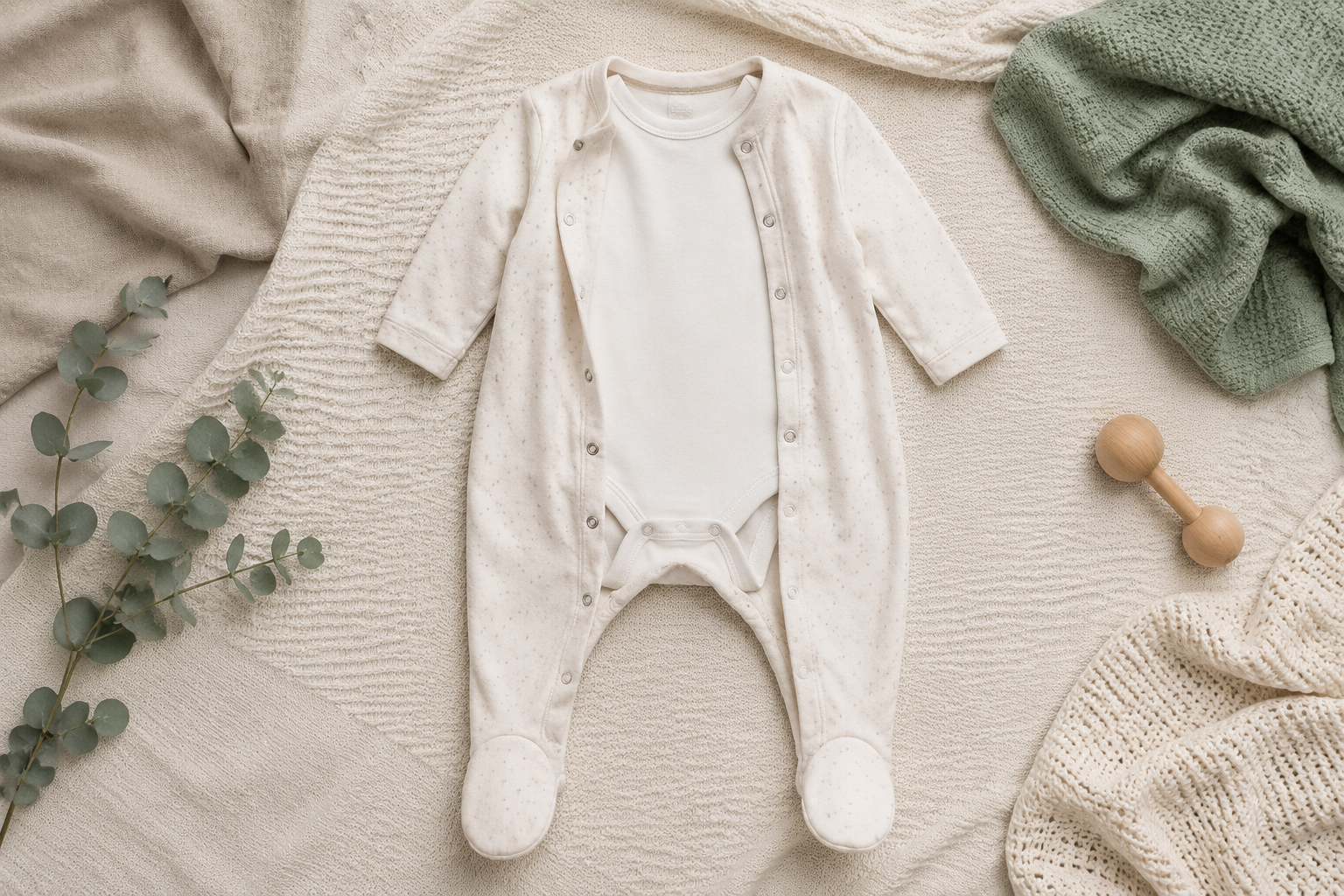
What size newborn clothes should you buy? The short answer is to use the size chart for the item you are ordering, then choose a small mix of newborn and 0–3 month pieces rather than filling the drawer with one size. UK baby clothing labels are helpful starting points, but babies grow at different rates and sizing can vary between retailers.
This practical guide explains how newborn sizing works, how a baby vest or babygrow should fit, and what to choose when you are buying a personalised outfit or gift.
If you are shopping before your baby arrives, buy a modest number of newborn essentials and more pieces in 0–3 months. Newborn sizing may be useful from birth, while 0–3 month clothes give you extra growing room and may last longer.
For the best fit, check the individual product’s size guide and use your baby’s length or weight where the retailer provides those measurements. Age bands are approximate; the product chart is more useful than the label alone.
Common UK baby clothing labels include tiny baby or premature, newborn, 0–3 months and 3–6 months. These names are not a universal standard. A newborn vest from one brand can fit differently from the same labelled size elsewhere, so always check the measurements shown on the product page.
If your baby is measuring particularly small or large during pregnancy, use that information as a shopping guide rather than a guarantee. You can add more of the best-fitting size after birth.
The main difference is room. Newborn clothing is usually cut for the first stage, while 0–3 month clothing allows more space through the body, arms and legs. Some babies wear newborn size for several weeks; others move into 0–3 months almost immediately.
Buying both sizes keeps your options open. A simple approach is to wash and prepare a few newborn outfits, keep several 0–3 month basics ready, and leave labels on surplus items until you know which fit works best.
Where a product page gives height, length or weight guidance, compare it with your baby’s current measurements. These details are especially useful when two age bands overlap or when your baby is between sizes.
Choose the size that provides comfortable movement and room for a nappy without looking loose around the neckline. If your baby is close to the top of a size range, the next size may offer better value—particularly for an item that will take time to personalise or is being bought ahead of a special occasion.
A baby vest or bodysuit should sit smoothly over the nappy and fasten without the poppers pulling. The neckline should stay in place, while the arm and leg openings should not leave deep marks. Your baby should be able to move their arms and legs naturally.
The vest may be too small if the fabric is stretched across the chest, the poppers strain, or it is difficult to fasten over a clean nappy. It may be too large if it bunches heavily, the shoulders slip, or the neckline gapes.
When you are ready to choose a design, browse our personalised baby vests. For help deciding how many basics to buy, read how many vests a newborn needs.
A babygrow should give your baby space to stretch without excess fabric twisting around the body. Check that the feet are not pressed tightly against the ends, the sleeves do not pull at the shoulders, and the fastenings close comfortably.
If the feet and legs are becoming tight while the body still fits, it is usually time to try the next size. If the garment is very loose or the hands and feet disappear inside it, compare the fit with the manufacturer’s guidance before use.
See our personalised baby grows for name, announcement and new-baby designs.
Always follow the care, fit and use instructions supplied with the particular garment.
Prepare enough everyday clothing to cover regular changes, but avoid buying a large quantity in the smallest size. A balanced starter wardrobe might include a few newborn pieces, a larger selection in 0–3 months and one or two later-size outfits for gifts or future use.
Your washing routine, the season and how often you expect outfit changes will all affect the quantity you need. Our newborn clothes checklist helps you plan the essentials without overbuying.
If you know the baby’s current size, follow the product guide and allow for the time between ordering and gifting. If you are buying before the birth or are unsure, 0–3 months can be a more flexible choice than newborn size because it offers a little more growing room.
Think about when the outfit will be worn. A birth-announcement vest may need an early size, while a design for a celebration several weeks away may be better in the next size. Double-check the name, spelling and date before ordering, because personalised items are made specifically for the recipient.
Explore our full range of personalised newborn clothes to coordinate vests, babygrows, blankets, hats, bibs and pyjamas.
Many babies start in newborn or 0–3 month clothing, but there is no single size that fits every newborn. Check the product’s own chart and use your baby’s length or weight where those measurements are provided.
No. Newborn clothing is generally smaller and intended for the earliest stage, while 0–3 months provides more room for growth. The exact difference varies by retailer.
It is sensible to have a small selection of both. Buy fewer newborn items and keep more 0–3 month basics ready, then add to the best-fitting size after your baby arrives.
A vest should sit smoothly over the nappy, fasten without pulling and allow free movement. The neckline should stay in place and the openings should not leave deep marks.
Common signs include strained poppers, stretched fabric, tight feet on sleepsuits, restricted movement or persistent marks from seams and elastic.
Use the baby’s current measurements if you know them. When buying ahead or if you are unsure, 0–3 months often gives more flexibility than newborn size, but always check the individual product guide.
Yes. Age labels and measurements can vary, so compare the size chart on the exact product page instead of relying only on the age band.